
How a Video Production Company in Nigeria Filmed YFS Heroes
A client brief from Singapore. A storyboard drawn in Abuja. Two and a half days on the ground in Niger State. And the raw footage back with the edit suite in under 24 hours.
By Toba Oduwaiye, Founder & Producer, Latitude Space Africa
In June, Coromandel Pictures got in touch from Singapore. They were making a documentary for Young Founders School, and it had to be filmed in Minna, Niger State.
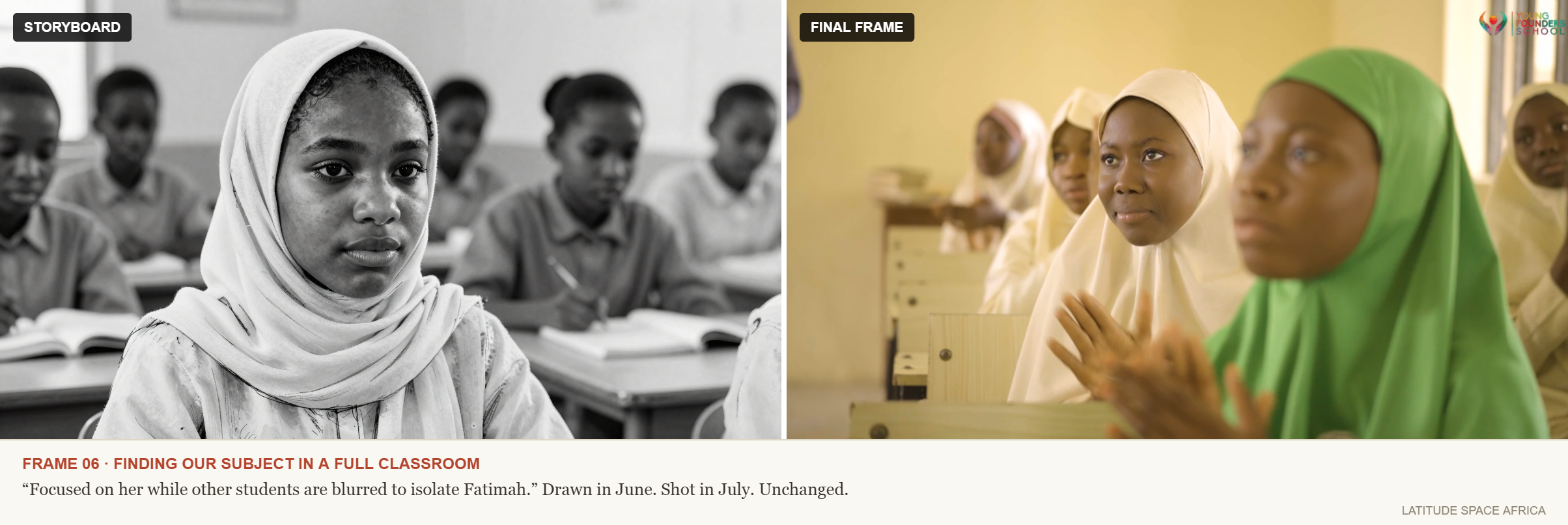
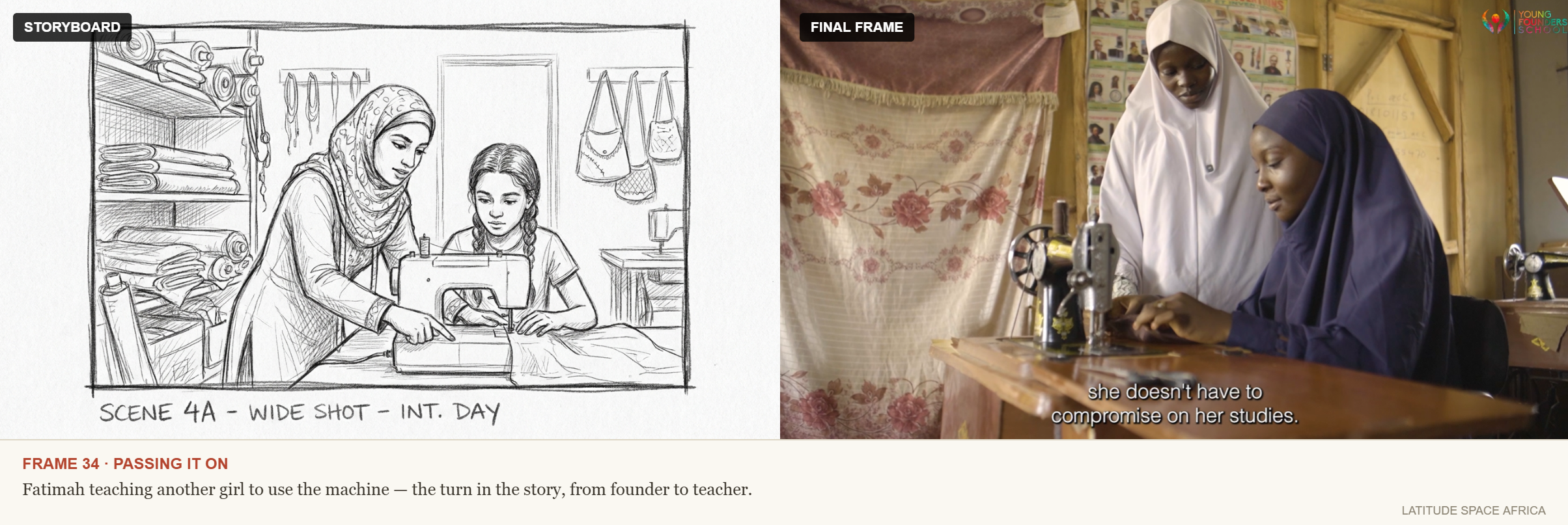
They had a script. They had a subject — Fatimah, a seventeen-year-old who designs and sells satin accessories under her own label while she is still in secondary school. What they needed was a team already in Nigeria who could turn that script into footage worth cutting.
Nobody had to fly in. We read the script in Abuja, storyboarded it shot by shot, drove up, filmed for two and a half days, and had the raw files with them inside 24 hours.
This is how that worked — and what it says about hiring local.
Local Production Support for International Teams Filming in Nigeria
Most international productions arrive in Nigeria needing three things at once: someone who can read a script and see the shots in it, someone who knows what the roads actually do, and a crew who can hold an international standard without a supervising DP watching over their shoulder.
Those are usually three separate conversations with three separate vendors. We think they should be one.
We have worked as the local production partner for Bloomberg, CNBC, Coromandel Pictures and others. The value is not simply that we cost less than flying a crew in — though we do. It is that we know the terrain, and we will tell you the truth about it before you book the flights.
We read the script and drew every shot
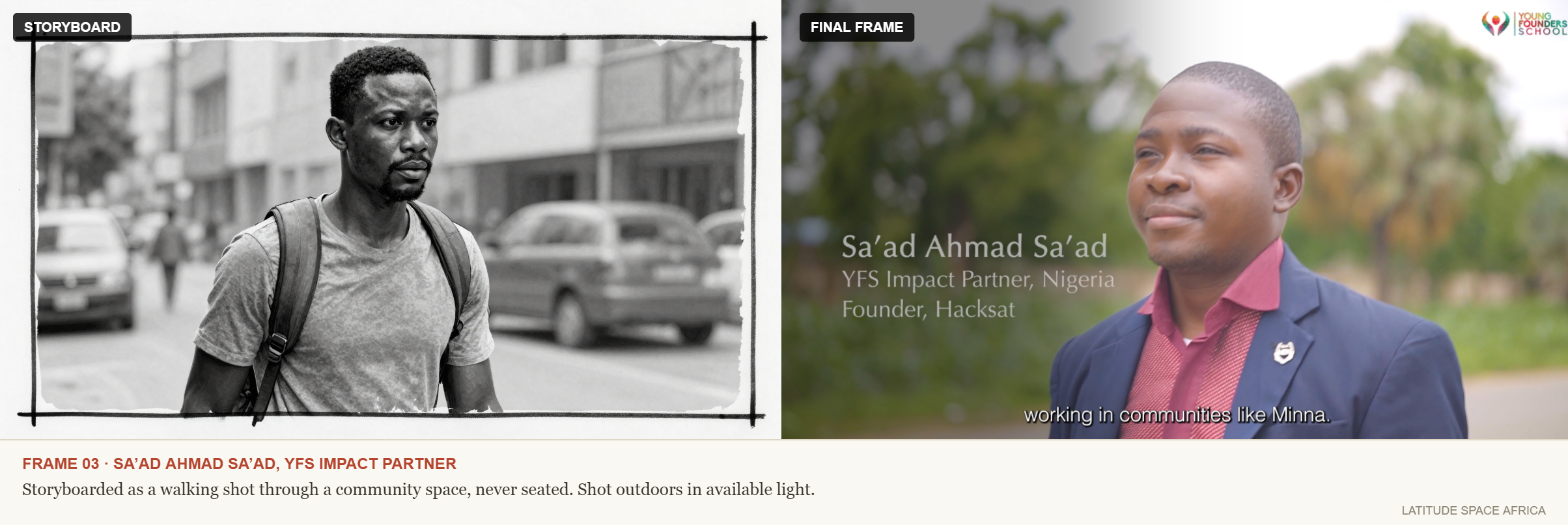
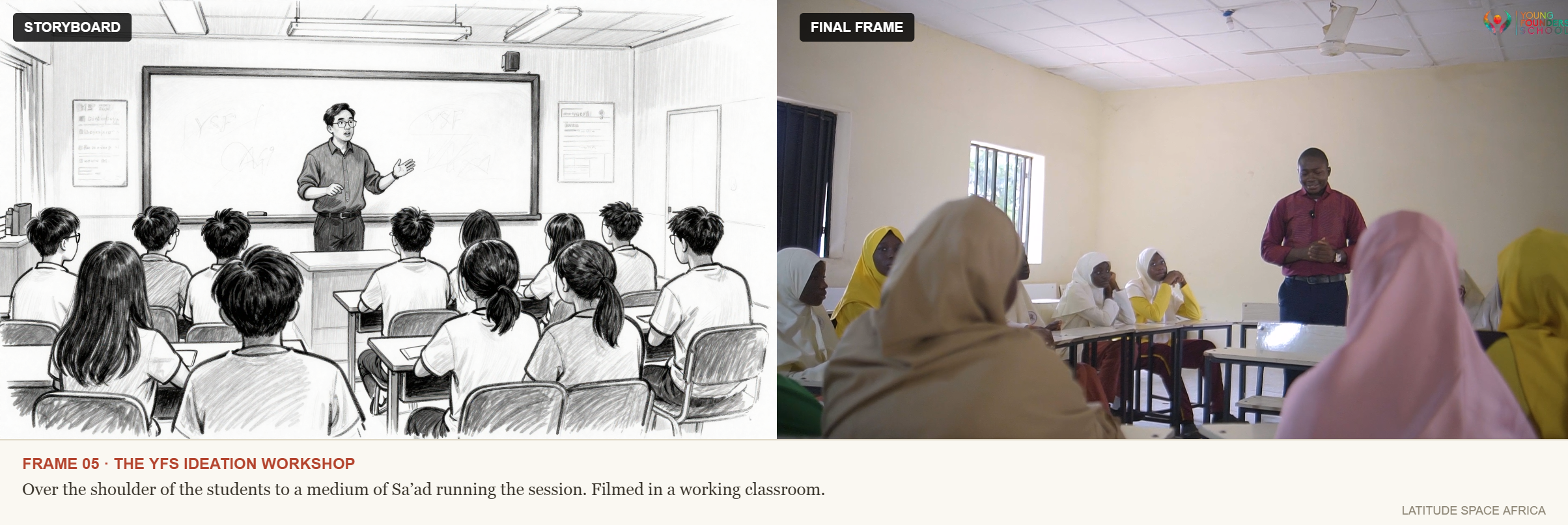
Before anyone packed a case, we broke the script down into a storyboard: 41 shots across 11 scenes, each one specifying its framing, its location, its cast and its frame rate.
That storyboard did two jobs. It let Coromandel see the film before it existed and sign it off from another country. And it meant that when we arrived in Minna, nobody stood in a classroom wondering what to point the camera at. We had a list. We worked the list.
We told the client it would take longer than one day
This is the part international producers rarely hear from a local partner, and it matters more than anything else on this page.
Coromandel's first assumption was a single shoot day. We came back and said two and a half. Not to inflate the invoice. Because of the road.
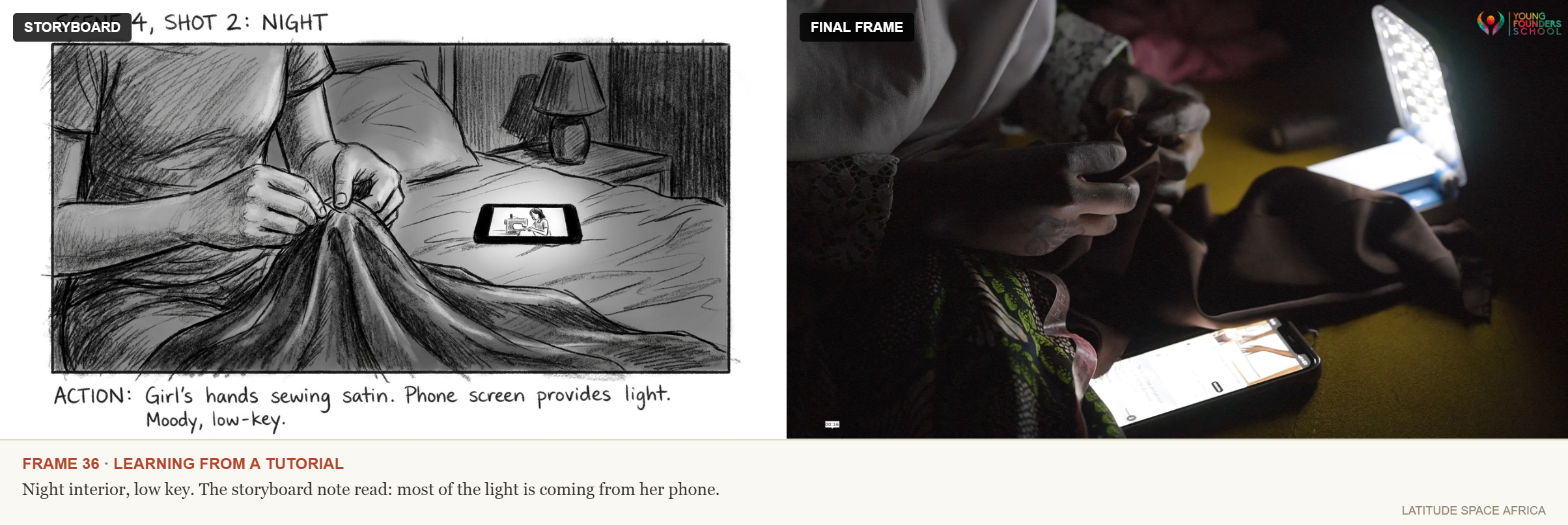
Minna sits a couple of hours northwest of Abuja, and in this part of Nigeria you do not put a crew and a camera package on that road after dark. So we built the schedule backwards from one rule: every kilometre of travel and every frame of footage happens in daylight. Days one and two carried the workshop, the interviews, the workshop sequence and the night interior. On day three we picked up the last city establishing shots and drove home before evening.
Nothing went wrong on that shoot. That was not luck. That was the schedule.
A production partner who says yes to an unrealistic day count is not being agreeable. They are transferring the risk to you.
Two operators. One gimbal. International finish.
We sent a small team: two camera operators who also handled sound and lighting. Sony mirrorless bodies on a gimbal. Most b-roll at 60fps so the post house had slow motion to work with; interviews at 25fps.
Small crews move faster, cost less, and are far less intrusive in a real classroom full of real teenagers. They only work if every person on the team is genuinely multi-skilled. Ours are.
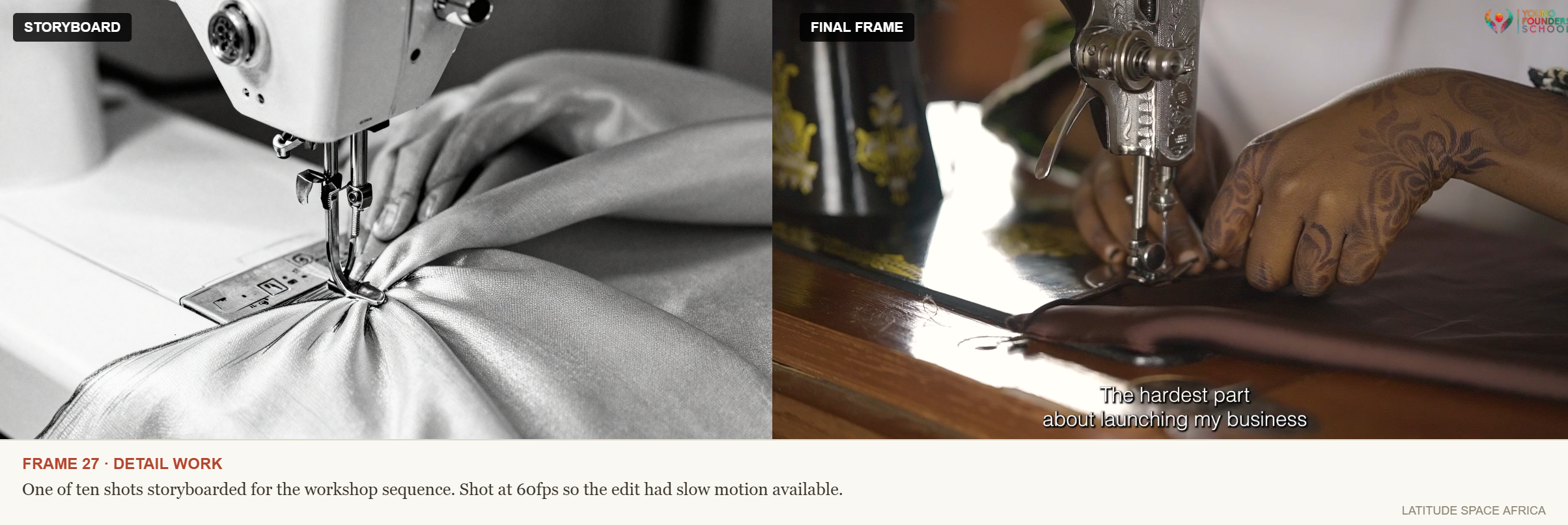
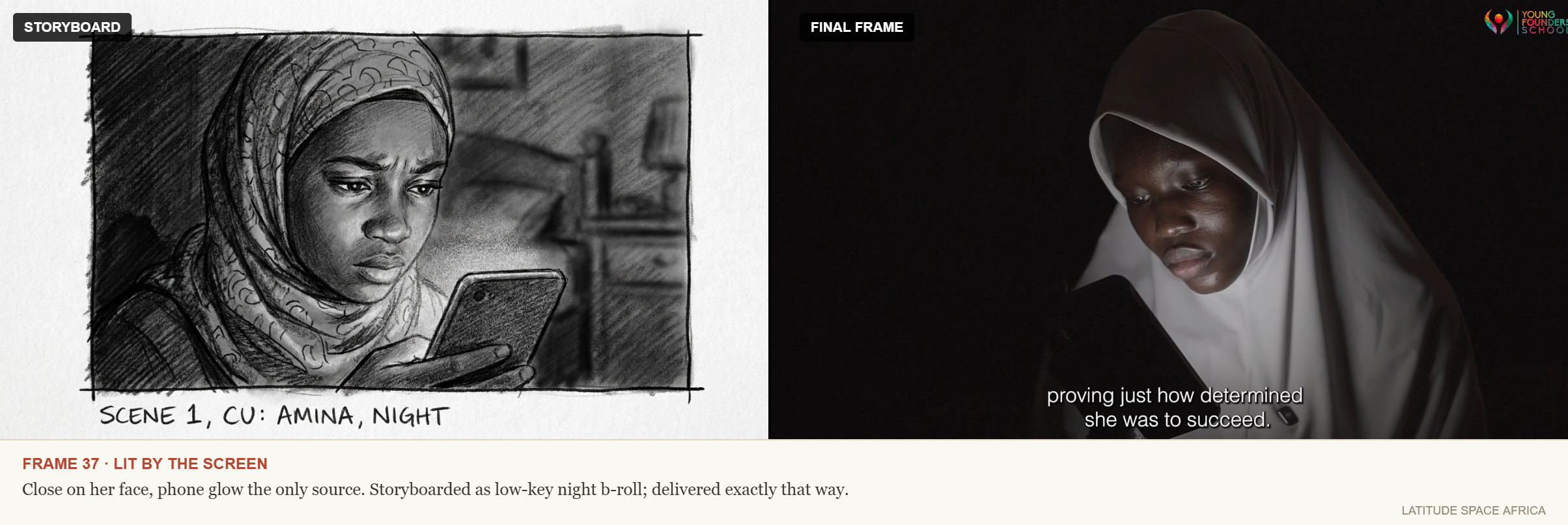
The hardest sequence was the night interior, and it is the one that proves the point about small crews. The storyboard note read: most of the light is coming from her phone. No truck. No generator. No lighting department. Two operators, a practical lamp and a phone screen.
The footage was with the client in under 24 hours
Coromandel handled post. Their editors were waiting.
We delivered the full raw package less than a day after we wrapped. No drip-feed, no "we'll send the rest next week." A client should never be sitting in Singapore wondering whether the material coming out of Nigeria is any good.
They were happy with it. YFS were happy with it. The finished film has since screened to a private audience at a fundraiser dinner.
The monument that wasn't there
One honest note, because every shoot has one.
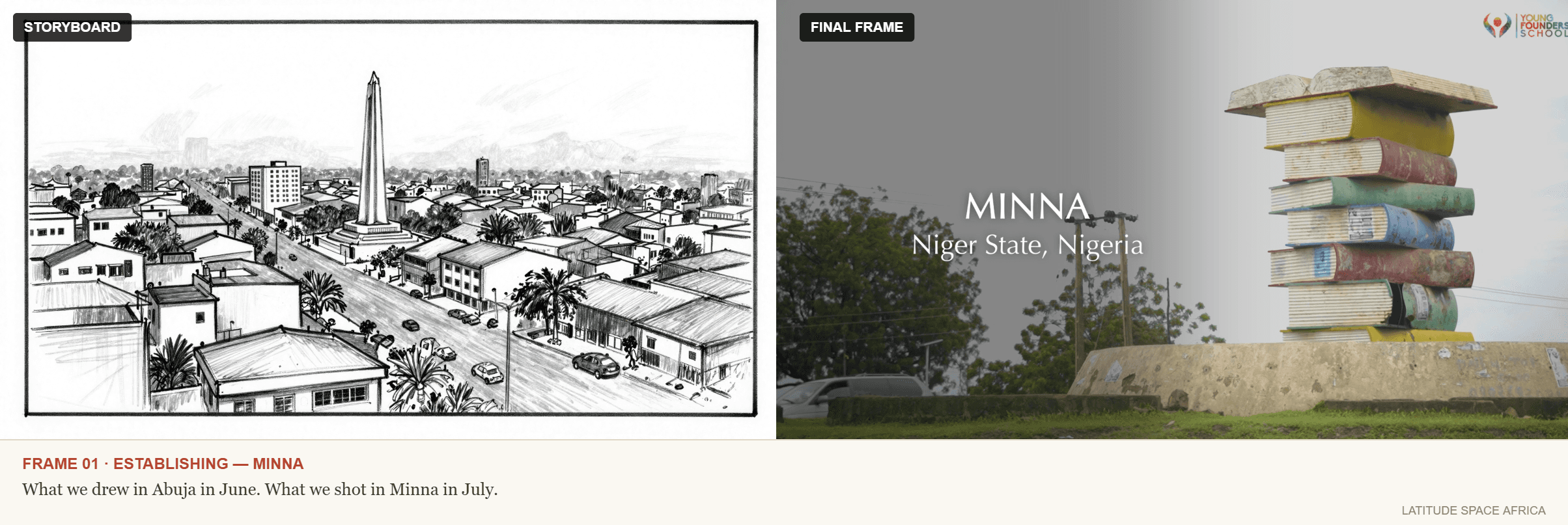
The storyboard called for a wide establishing shot of a Minna city monument. When we arrived, most of the roundabouts and city centres were under reconstruction. The shot we had drawn no longer existed.
So we worked the city until we found one that did — a stack of giant painted concrete books, still standing at the roadside. For a film about a schoolgirl building a business between her studies, it was better than anything we had planned. It is the frame at the top of this page.
That is what local knowledge actually buys you. Not a guarantee that nothing changes — a team who can solve it that morning, on location, without a call back to head office.
Planning a shoot in Nigeria?
Latitude Space Africa is a video production company in Nigeria based in Abuja. We provide local production support for international teams filming in Nigeria — storyboarding, scheduling, crew, kit, logistics and delivery. We have done it for Bloomberg, CNBC and Coromandel Pictures.
Tell us where you need to be and what you need to come back with.
Production: Latitude Space Africa, Abuja · Client: Coromandel Pictures · Film: "Fund the Next Fatimah" for Young Founders School · Location: Minna, Niger State, Nigeria · Shoot: Two and a half days, July · Crew: Two operators · Kit: Sony mirrorless, gimbal, 60fps b-roll